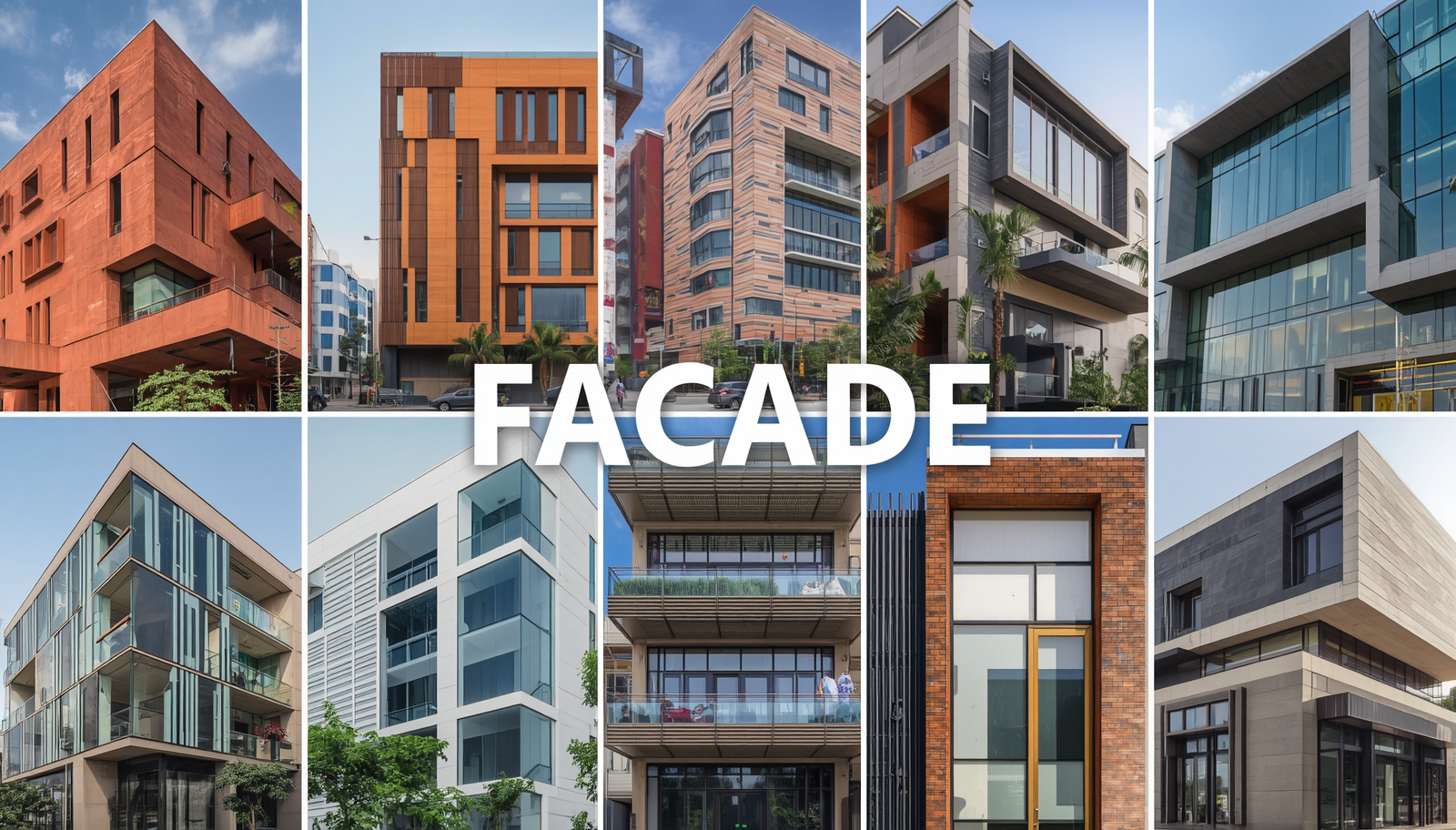
The Indian construction and architectural industry has witnessed a major transformation in façade design over the last decade. Modern facades are no longer limited to enhancing the exterior appearance of a building. Today, façade systems play an important role in energy efficiency, weather protection, thermal insulation, natural lighting, acoustics, and overall building performance. From commercial towers and IT parks to luxury villas and residential apartments, architects across India are increasingly adopting advanced façade systems to create aesthetically appealing and sustainable buildings. Below is a detailed guide to the most commonly used façade systems in India, along with their major advantages and applications.
Terracotta facades are eco-friendly exterior systems made using natural clay materials. These facades are increasingly used in sustainable architecture, educational campuses, cultural buildings, and premium commercial projects.
Terracotta panels offer natural aesthetics, excellent thermal insulation, and high durability. They are resistant to UV rays, weather exposure, and fading over time. Architects prefer terracotta facades for projects that aim to combine sustainability with elegant earthy aesthetics.
Double skin facades consist of two layers of façade systems separated by an air cavity. These advanced systems are mainly used in premium commercial buildings and green-certified projects where energy efficiency is a priority.
The biggest advantage of double skin facades is superior thermal and acoustic performance. They significantly reduce heat gain, improve indoor comfort, and minimize external noise. These facades also enhance natural ventilation and reduce long-term energy costs for large commercial buildings.
Ventilated facades are advanced exterior systems designed with an air gap between the cladding material and the building wall. These facades are gaining popularity in India for sustainable and energy-efficient buildings.
One of the major advantages of ventilated facades is improved thermal insulation and reduced heat transfer into the building. The ventilation cavity helps regulate temperature and moisture while improving indoor comfort. These systems also increase the lifespan of the building envelope and reduce energy consumption for air conditioning.
Spider glazing facades use specialized stainless-steel fittings to hold glass panels without conventional aluminium frames. These systems are commonly used in airports, shopping malls, showrooms, luxury retail stores, and premium office entrances.
The biggest advantage of spider glazing is its highly transparent and modern appearance. It creates maximum visibility and allows unobstructed natural light penetration. Architects often use spider glazing to create visually striking entrances and premium commercial facades with minimal structural visibility.
HPL facades are increasingly popular in modern Indian architecture due to their attractive wood-like appearance and durability. These panels are commonly used in residential buildings, schools, hospitals, offices, and commercial projects where contemporary aesthetics are desired.
One of the key advantages of HPL facades is their resistance to moisture, UV rays, scratches, and weather exposure. They are available in a wide variety of colors and textures while requiring very low maintenance. HPL panels help create warm and elegant exteriors without the maintenance challenges associated with natural wood.
Stone cladding facades are commonly used in luxury villas, hotels, resorts, temples, and premium residential buildings. Natural stones such as granite, sandstone, marble, and slate are used to create timeless and elegant exterior appearances.
The major advantage of stone facades is their durability and premium aesthetic appeal. They offer excellent resistance to harsh weather conditions and provide natural thermal insulation. Stone cladding also enhances the visual richness and long-term value of a property, making it a preferred option for high-end architectural projects.
ACP facades are widely used in India for commercial buildings, retail outlets, hospitals, petrol pumps, showrooms, and educational institutions. Aluminium Composite Panels are lightweight cladding materials available in various colors, textures, and finishes, including metallic, wooden, and stone-like appearances.
The biggest advantage of ACP facades is their versatility and cost-effectiveness. They are easy to install, lightweight, weather-resistant, and require minimal maintenance. ACP panels also allow architects to achieve attractive modern elevations without significantly increasing construction costs.
Glass Curtain Wall Facades are non-structural exterior systems made primarily using aluminium frames and glass panels. These systems are commonly used in commercial towers, airports, hospitals, hotels, and premium residential projects. Curtain walls help protect the building from wind, rain, heat, and external environmental conditions while creating a modern architectural appearance.
The major advantage of curtain wall facades is their lightweight construction and flexibility in design. They also improve thermal performance, weather resistance, and sound insulation when designed correctly. Unitized curtain wall systems additionally allow faster installation and better quality control for large projects, reducing on-site construction time and ensuring greater precision.
Glass facades are among the most popular façade systems used in modern commercial and high-rise buildings across India. These facades create a sleek, contemporary appearance while allowing maximum natural light inside the building. Glass facades are widely used in IT parks, shopping malls, hotels, airports, and corporate offices because they provide excellent visibility and premium aesthetics.
One of the biggest advantages of glass facades is their ability to create visually open spaces while reducing the need for artificial lighting during daytime. Advanced glass technologies such as double glazing and low-E glass also help improve thermal insulation and energy efficiency. Architects prefer glass facades for their modern appeal and ability to enhance the overall value of a building.
Aluminium Louvres & Screen Facades are a smart architectural solution that combines modern aesthetics with practical functionality. Designed to enhance building exteriors, they provide effective sun shading, improved ventilation, and enhanced privacy while reducing heat gain and improving energy efficiency. Manufactured from high-quality, corrosion-resistant aluminium, these façade systems are lightweight, durable, and require minimal maintenance, making them ideal for India’s diverse climatic conditions. Available in a wide range of colours, finishes, and customised designs, aluminium louvres and screens are perfect for residential, commercial, hospitality, and institutional projects, adding a contemporary architectural appeal while improving overall building performance.
Ceramic and Porcelain Facades offer the perfect combination of elegance, durability, and high performance for modern architectural projects. Designed to withstand harsh weather conditions, UV exposure, moisture, and pollution, these façade systems provide a long-lasting exterior finish with minimal maintenance. Available in a wide range of colours, textures, sizes, and stone-inspired designs, ceramic and porcelain panels enhance the visual appeal of residential, commercial, hospitality, and institutional buildings. Their excellent scratch resistance, fire resistance, and thermal performance make them an ideal choice for sustainable and energy-efficient construction in India’s diverse climate, delivering a contemporary façade that is both stylish and built to last.
Brick Cladding Facades combine the timeless charm of traditional brickwork with the benefits of modern construction technology. Designed to enhance both residential and commercial buildings, brick cladding offers a warm, natural appearance while providing excellent durability, thermal insulation, and weather resistance. Available in a variety of colours, textures, and finishes, it creates a distinctive architectural character without the weight and maintenance of conventional brick walls. Suitable for homes, villas, hotels, offices, and commercial spaces, brick cladding is a sustainable and low-maintenance façade solution that adds lasting value, improves energy efficiency, and withstands India’s diverse climatic conditions with ease.